
For many London SMEs, the question of how to structure IT support is no longer a theoretical one. Unplanned downtime, security incidents, and the sheer complexity of managing cloud platforms such as Microsoft 365 and Azure have forced business owners to weigh their options carefully. Remote IT support has emerged as the dominant model for businesses with fewer than 100 employees, not because it is a convenient shortcut, but because it consistently delivers broader expertise, faster response, and more predictable costs than a comparable in-house arrangement. This article examines both models with rigour, so London SME decision-makers can base their choice on evidence rather than assumption.
Table of Contents
- Quick Takeaways
- The Real Cost of In-House IT Support
- What a Remote IT Helpdesk Actually Delivers
- Why London SMEs Choose an Outsourced IT Helpdesk
- Comparing Your Options Head to Head
- Security and Compliance in a Remote Support Model
- How to Evaluate a Remote IT Support Provider in London
- Frequently Asked Questions
- References
Quick Takeaways
| Key Insight | Explanation |
|---|---|
| In-house IT costs exceed headline salaries significantly | For a typical 75-person UK SME, a three-person in-house team that appears to cost around £120,000 in base salaries often totals £180,000 or more once training, tooling, recruitment, and benefits are included. |
| Outsourced managed IT is priced per user | Comprehensive remote IT support packages for UK SMEs are typically priced in the range of £60 to £90 per user per month, covering helpdesk, monitoring, patching, cybersecurity, and backup. |
| Coverage gaps are the hidden risk of in-house teams | One or two in-house engineers cannot provide round-the-clock coverage. Absence through leave, sickness, or out-of-hours incidents leaves the business unprotected at precisely the moments it matters most. |
| Remote support resolves the majority of issues without a site visit | Most software, access, and configuration problems can be diagnosed and resolved remotely, reducing the time between incident report and resolution to minutes rather than hours. |
| Scalability is built into the outsourced model | Adding or removing users from a managed service agreement is straightforward. Scaling an in-house team involves recruitment cycles that can take months and create fixed overhead whether or not the headcount is fully utilised. |
| Specialist depth is difficult to replicate internally at SME scale | A single in-house hire is typically a generalist. An outsourced provider brings certified engineers across cloud, security, networking, and compliance, available on demand. |
| SLAs create accountability that informal in-house arrangements lack | A managed service agreement defines response times, resolution targets, and escalation paths. In-house support relies on goodwill and informal expectation-setting, which rarely holds under pressure. |
The Real Cost of In-House IT Support
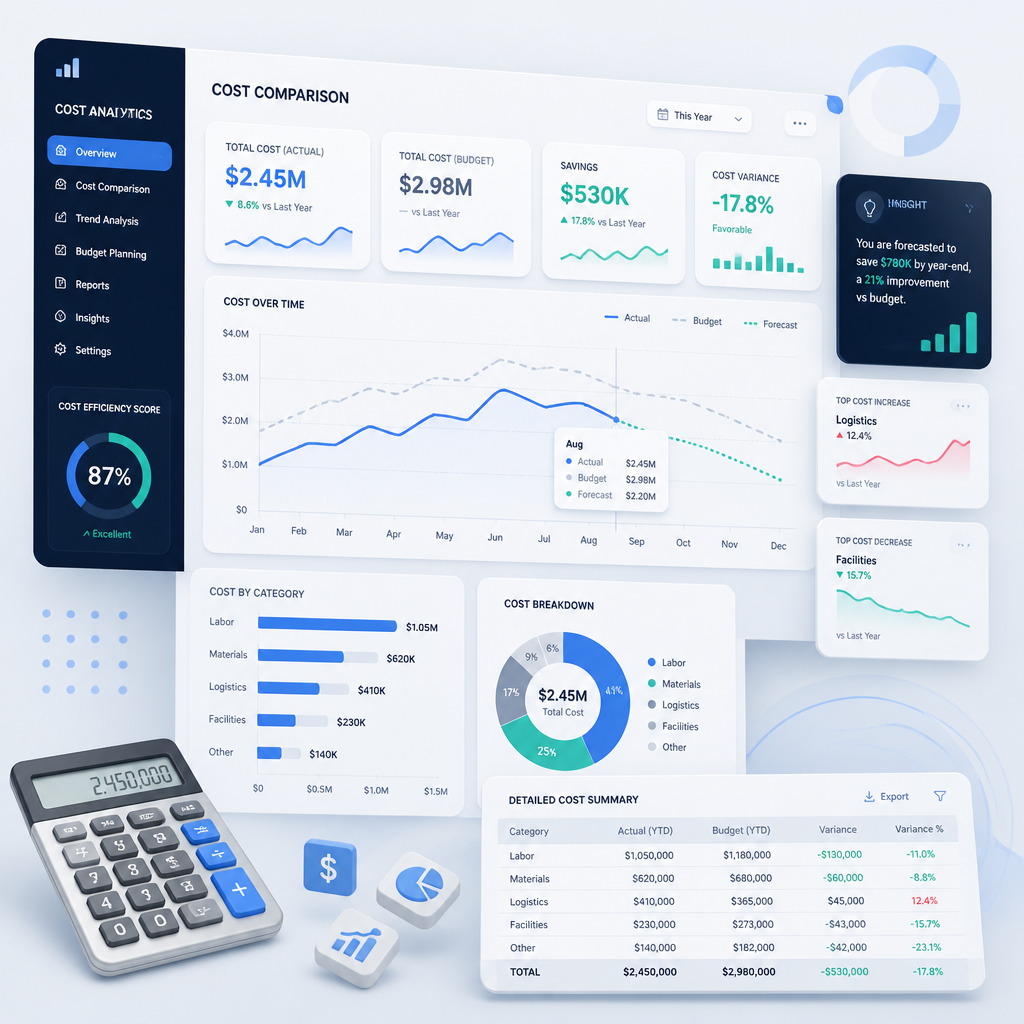
When business owners calculate the cost of in-house IT, the most common mistake is to stop at the salary figure. A job advertisement for an IT Support Specialist in London might list a salary of £28,000 to £40,000, and a Senior Systems Engineer at £45,000 to £65,000. Those figures are real, but they represent only the starting point of the true cost.
Beyond base salaries, a business must budget for employer National Insurance contributions, pension auto-enrolment, paid leave, sick pay, and any performance bonuses. Recruitment costs, including agency fees or advertising spend, typically add a further one to three months of salary per hire. Ongoing training and professional certification renewal, particularly for cloud platforms such as Azure and Microsoft 365, carry their own annual cost. Then there is the tooling: professional-grade remote monitoring and management software, helpdesk platforms, and security suites all carry licence fees that an SME’s single IT hire must absorb entirely rather than share across a client base.
The result is that for a typical 75-person UK SME, a baseline in-house team of three people, covering first-line support, systems administration, and strategic oversight, carries a total cost of ownership considerably above the sum of their advertised salaries. That gap is not trivial. It is the difference between a cost that looks reasonable in a spreadsheet and one that becomes difficult to justify when weighed against what outsourced alternatives deliver.
Pro tip: Before comparing managed IT service pricing against in-house costs, calculate your true in-house total: add at least 30% to base salaries to account for employer on-costs, then add tooling licences, training budgets, and an annualised recruitment provision. The comparison shifts materially once all components are visible.

What a Remote IT Helpdesk Actually Delivers
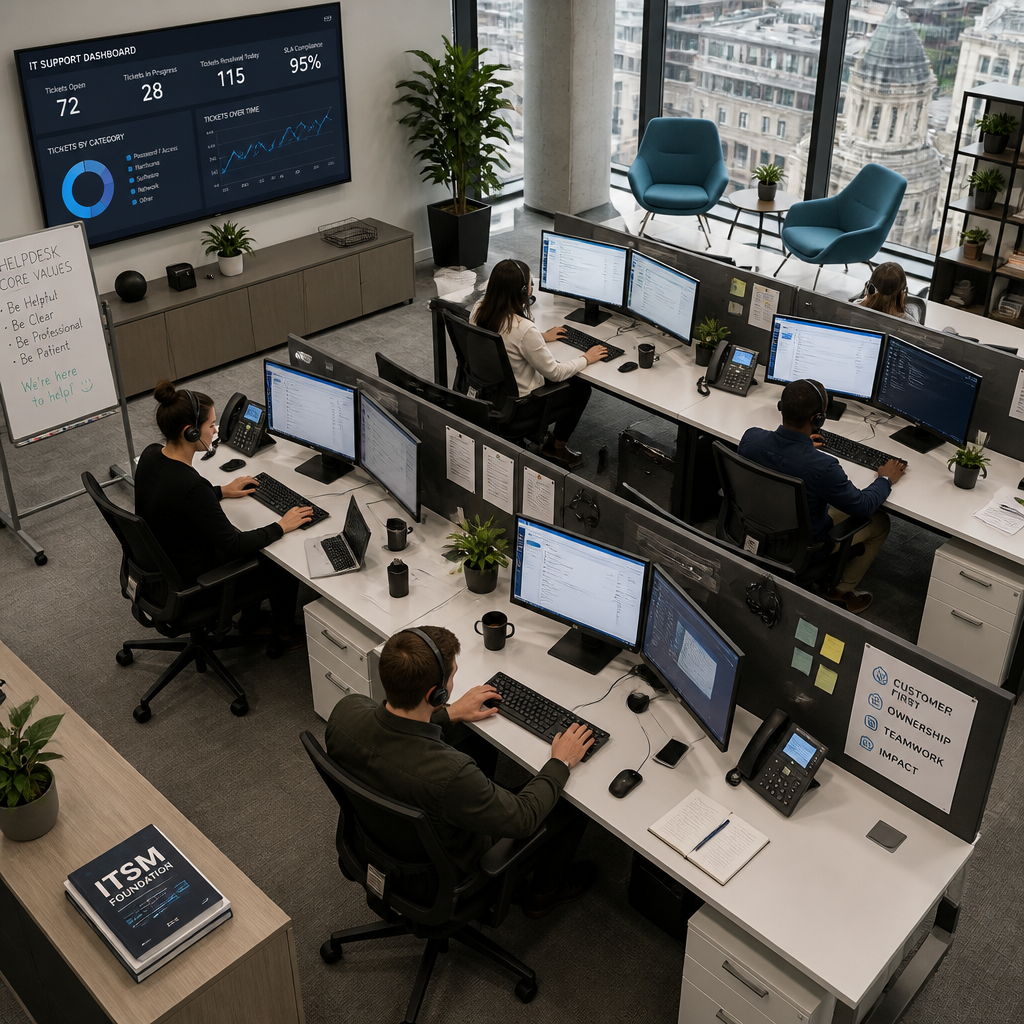
The term remote IT helpdesk is sometimes misread as a stripped-down alternative to proper IT support, a call centre that logs tickets and escalates everything. In practice, a well-structured managed IT service is architecturally deeper than most in-house SME teams.
First-Line and Second-Line Resolution
A remote helpdesk handles the full range of day-to-day incidents: password resets, access provisioning, software configuration issues, email and Microsoft 365 problems, VPN connectivity, and device management. These are resolved directly, without escalation, by engineers who handle similar issues across multiple client environments and develop pattern recognition that a sole in-house hire rarely accumulates at the same pace.
Proactive Monitoring and Maintenance
Reactive support, waiting for something to break before fixing it, is the more expensive model even though it feels like the cheaper one. Proactive monitoring detects failing drives, unusual network traffic, overloaded servers, and missed patch deployments before they become incidents. For London SMEs running cloud infrastructure on Azure, AWS, or GCP, this continuous oversight is what separates managed IT from break-fix support.
Cloud System Management
Microsoft 365 and Azure environments require ongoing administration: licence assignment, conditional access policy management, SharePoint governance, security baseline enforcement, and regular configuration reviews. These tasks are time-consuming and require certified expertise. A managed provider handles them as a standard component of the service, not as a premium add-on.
Eliminating travel time from the support equation means that helpdesk engineers can address software faults and access management issues the moment they are reported, rather than waiting for a physical visit to be scheduled. The consequence is a reduction in the time business operations are interrupted.
Why London SMEs Choose an Outsourced IT Helpdesk
The shift toward outsourced IT helpdesk services among London SMEs is driven by several converging pressures specific to the capital. London businesses operate in a high-cost environment where office space and salaries are among the most expensive in the UK. They also tend to grow and contract more rapidly than businesses in lower-cost regions, making fixed headcount a risky commitment. And they increasingly operate hybrid or fully distributed teams, which places demand on IT infrastructure that differs fundamentally from the single-office model.
Cost Predictability in a Variable Environment
A per-user monthly fee converts IT support from an unpredictable operational expense into a line item that scales with headcount. When the business hires, the IT cost rises proportionally. When it reduces staff, the cost reduces. There are no redundancy settlements, no six-month notice periods, and no stranded tool licences.
Access to Senior-Level Expertise Without the Salary
One of the structural advantages of a managed IT service is that the client business gains access to engineers at multiple levels of seniority, including those with certifications in cloud architecture, cybersecurity, and compliance, without paying the market rate for each individual. A London-based IT Manager with senior-level experience commands a salary at the higher end of the market. An outsourced provider distributes that expertise across its client base, making it accessible to a 20-person firm that could not otherwise afford it.
Continuity Across All Hours and All Conditions
A single in-house IT hire is unavailable during annual leave, sick periods, bank holidays, and evenings. For a business that operates a hybrid team across multiple time zones, or that cannot afford for a critical system failure to wait until Monday morning, this coverage gap is a genuine operational risk. A managed service maintains continuity through shift structures and on-call rotas that an SME-scale internal team cannot replicate.
Pro tip: When reviewing a managed IT service proposal, ask specifically what happens to your account when your named account manager is unavailable. A credible provider has documented escalation paths and named backup contacts, not a general helpdesk queue as the fallback.
Comparing Your Options Head to Head
The three practical options available to a London SME are a fully in-house IT team, a fully outsourced managed IT service, and a co-managed hybrid model in which a small internal resource is supplemented by an external provider for specialist functions. Each has a distinct profile of cost, capability, and risk.
| Criterion | In-House IT Team | Outsourced Remote IT Helpdesk | Co-Managed Hybrid |
|---|---|---|---|
| Cost structure | Fixed and high. Salaries, on-costs, tools, training, and recruitment overheads are largely non-variable. | Variable and predictable. Priced per user per month; scales with headcount. | Moderate fixed cost (one internal hire) plus a lower per-user managed services fee for specialist coverage. |
| Breadth of expertise | Limited to the skills of those hired. Generalists at SME scale; specialists are rarely affordable. | Wide. Access to certified engineers across cloud, security, networking, and compliance. | Internal hire provides business-specific knowledge; external team provides technical depth. |
| Coverage hours | Business hours only unless overtime or on-call pay is agreed. Gaps during leave and illness. | Continuous. Proactive monitoring and helpdesk coverage outside standard hours as part of the agreement. | Internal hire covers business hours; outsourced provider covers out-of-hours and specialist escalations. |
| Scalability | Slow. New hires require months of recruitment and onboarding. Reduction involves redundancy process. | Immediate. Add or remove users from the agreement within a billing cycle. | Moderate. Internal headcount remains relatively fixed; outsourced component scales flexibly. |
| Accountability | Informal. Performance expectations rely on management relationships rather than documented commitments. | Contractual. SLAs define response times, resolution targets, and escalation procedures. | Contractual for the outsourced element; managed internally for the employed hire. |
| Best fit | Organisations with 150 or more staff, complex proprietary systems, or regulatory requirements for physical data control. | SMEs with 5 to 100 users, hybrid or distributed teams, and standard cloud-based infrastructure. | Businesses with a single internal IT generalist that needs strategic and specialist augmentation. |
The co-managed hybrid model is gaining traction among UK businesses that want the contextual knowledge an internal person provides, combined with the depth and continuity an outsourced provider delivers. It is not a compromise so much as a deliberate architecture, one that iTO.London’s managed IT support services are designed to accommodate alongside fully outsourced arrangements.
Security and Compliance in a Remote Support Model
A common concern raised by London SMEs considering outsourced remote IT support is whether granting an external provider access to their systems introduces unacceptable security risk. The concern is legitimate but, in practice, it points in the opposite direction from what is assumed.
Secure Remote Access Standards
All remote support sessions through a reputable managed provider operate over encrypted connections, with multi-factor authentication required at every point of entry. Access is session-specific, logged, and auditable. The security posture of a well-configured remote support environment is significantly stronger than the ad hoc access arrangements that typically exist in SME in-house teams, where shared admin credentials and undocumented access paths are common.
Compliance Coverage as a Service Component
For London businesses operating in regulated sectors such as financial services, legal, or healthcare, compliance requirements such as GDPR data handling obligations, Cyber Essentials certification, and sector-specific frameworks are ongoing management responsibilities, not one-time projects. A managed IT provider embeds compliance monitoring into the service rather than treating it as a separate engagement. That means patch schedules are maintained against compliance timelines, access controls are reviewed regularly, and audit logs are preserved in the required format.
Cybersecurity as Standard, Not Optional
Endpoint protection, email filtering, multi-factor authentication deployment, and security awareness training should be integral components of any managed IT service for an SME, not separately priced additions. When evaluating providers, the critical question is whether these controls are included in the baseline agreement or quoted as extras that erode the apparent cost advantage of outsourcing. iTO.London’s security and compliance services treat these as foundational, not peripheral, elements of the service.
How to Evaluate a Remote IT Support Provider in London
The managed IT services market in London is well-developed, and the quality of providers varies considerably. A decision made on price alone frequently results in a service that performs adequately during normal operations but fails under pressure. The following criteria are the ones that separate providers who deliver consistent value from those who deliver acceptable average performance.
Response Time Commitments and SLA Structure
A service level agreement should define not just when a provider will respond to a ticket, but how response times are tiered by severity. A critical system failure affecting the entire business should carry a materially shorter response commitment than a single-user software query. Providers that offer a single response time across all incident types are not engineering their support for real business impact. iTO.London’s IT helpdesk operates with differentiated SLAs tied to business impact, so the most disruptive incidents receive the fastest attention.
Engineering Seniority and Escalation Depth
Many managed IT services front-line their helpdesk with junior engineers and reserve senior expertise for escalations. This creates a two-tier service where complex problems take longer to resolve because they must travel through a queue before reaching someone qualified to address them. Ask prospective providers what proportion of tickets are resolved at first contact, and what the escalation path looks like for infrastructure-level issues.
Quarterly Technology Reviews
IT support that is purely reactive, fixing what breaks without reviewing the underlying architecture, allows technical debt to accumulate. A managed provider that conducts regular strategic reviews of the client’s IT environment identifies risks before they become incidents, aligns the technology stack with the business’s growth plans, and provides decision-makers with a clear picture of their IT posture. This is the difference between IT as a cost centre and IT as a business function. iTO.London’s quarterly technology reviews are structured to give business owners that strategic visibility.
Pro tip: Request a sample of a provider’s quarterly review report before signing a contract. The depth and specificity of that document tells you more about how they will manage your account than any sales presentation. A report that contains only generic observations and open-ended recommendations is a reliable indicator of how the ongoing relationship will feel.
Frequently Asked Questions
What is remote IT support and how does it work for London SMEs?
Remote IT support is the delivery of technical assistance, monitoring, and system management by engineers who connect to a business’s devices and infrastructure over a secure network connection, without requiring a physical site visit for the majority of issues. For London SMEs, this model provides access to a full team of IT specialists under a managed service agreement, typically priced per user per month, covering helpdesk, proactive monitoring, cloud management, and security. The provider responds to incidents raised by users or detected automatically through monitoring tools, resolving most problems within the agreed SLA timeframe.
How does the cost of remote IT support compare to an in-house IT hire in London?
A comprehensive managed IT service for a London SME is typically priced in the range of £60 to £90 per user per month, covering the full scope of IT operations. An in-house hire providing equivalent coverage would need to include salary, employer National Insurance, pension contributions, training, tooling, and recruitment costs, and would still leave coverage gaps during leave and out-of-hours periods. For most SMEs with fewer than 100 users, the all-in cost of outsourced remote IT support is lower than the true total cost of an equivalent in-house arrangement, and delivers broader expertise and continuous coverage.
Is outsourced IT helpdesk support secure enough for regulated London businesses?
Yes, provided the provider operates to recognised security standards. All remote support sessions should use multi-factor authentication and encrypted connections. A provider with Cyber Essentials certification and documented security policies for remote access is typically a stronger security posture than an in-house arrangement where access controls are managed less formally. For businesses in regulated sectors such as financial services or healthcare, compliance support including GDPR controls, audit logging, and Cyber Essentials maintenance should be built into the service agreement.
What is the difference between a remote IT helpdesk and a fully managed IT service?
A remote IT helpdesk addresses reactive support: users report problems, engineers resolve them. A fully managed IT service encompasses the helpdesk but adds proactive monitoring, patch management, cloud administration, security operations, strategic reviews, and infrastructure management. For a London SME that relies on cloud platforms such as Microsoft 365 or Azure, a fully managed service prevents many of the incidents that a helpdesk-only arrangement would be reactive to. The managed model reduces the frequency of disruption rather than simply reducing the time to recovery.
Can a London SME transition from in-house IT to an outsourced model without disruption?
Yes. A structured onboarding process is central to any competent managed IT transition. The provider conducts an audit of the existing environment, documents all systems, credentials, and configurations, and establishes monitoring and management tooling before the transition goes live. The critical risk in any transition is the knowledge transfer period, where institutional knowledge held by the departing or transitioning in-house person needs to be captured systematically. Providers that assign a dedicated onboarding engineer and produce a documented asset register and runbook reduce this risk significantly.
What should a London SME expect from a remote IT support SLA?
A well-structured SLA for a London SME should define response times by incident severity, with critical failures carrying a response commitment measured in minutes rather than hours, and lower-priority queries addressed within a defined window. It should specify the method of response (phone, remote session, or on-site visit), escalation procedures for unresolved issues, and reporting intervals. Quarterly service reviews should be written into the agreement, not offered informally. Transparent SLAs with measurable targets are a baseline expectation, not a premium feature.
If you are currently reviewing your IT support arrangement, we welcome your questions or observations in the comments below.
References
- In-house IT versus outsourced managed IT services: a cost and capability comparison for UK businesses
- The true total cost of in-house IT support for UK SMEs, including hidden overheads and staffing benchmarks
- On-site versus remote IT support for SMEs: operational and security considerations
- Outsourced IT support for UK businesses: what is included, typical pricing, and how to evaluate providers
- Outsourced IT support versus in-house IT for London SMEs: a practical decision guide for 2026